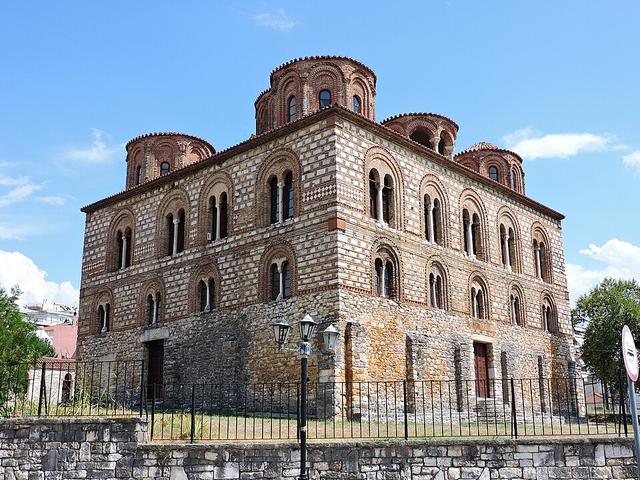
Arta and the Despotate of Epirus
How Arta became the capital of the Despotate of Epirus and what it left behind.
- Founded
- 1205, Michael I Komnenos Doukas
- Capital
- Arta, for most of the state's history
- Ottoman conquest
- 1449
- Monuments
- Parigoritissa, Vlacherna, Kato Panagia, Agia Theodora
In 1204, after the Fourth Crusade, the “pertinentia de Arta” was assigned to Venice by the Partitio Romaniae treaty. In 1205 Michael I Komnenos Doukas established the Despotate of Epirus, with Arta as its capital for most of its history. In 1227–1230 the capital was Thessalonica, when Theodore Komnenos Doukas expanded.
The 13th century
Around 1259–1260, after the Battle of Pelagonia, Michael VIII Palaiologos captured Arta from Michael II, who had recovered it by 1260. In the same period the great churches were built: Kato Panagia and Pantanassa by Michael II, and the Parigoritissa, the Despotate's new cathedral, under Nikephoros I Komnenos Doukas.
From the 14th century to the end
In 1313 a great fire destroyed much of the town. In 1337 Andronikos III brought Epirus under imperial rule and in 1347 the area passed to Stefan Dušan. In 1356 Nikephoros II re-established the Despotate, with Ioannina as capital. After 1367 the Albanians made Arta the centre of the Despotate of Arta, and in 1416 Carlo I Tocco captured it. The Ottomans plundered the town in 1384 and took it in 1449.