Agios Vasileios of the Bridge
A Byzantine church on the bank of the Arachthos with four phases of frescoes, from the 13th to the 17th century.
- Location
- Bank of the Arachthos, about 1 km from the bridge
- Dating
- Second half of the 9th century (Vokotopoulos)
- Excavation
- 1969–1970
- Frescoes
- Four phases, 13th–17th century
Agios Vasileios of the Bridge stands in the Top Alti area, on the bank of the Arachthos, about a kilometre from the historic bridge, which gives it its nickname. It is distinguished from Agios Vasileios of the Agora.
History
It was originally the katholikon of a monastery and was renovated in 1632 by the monk Theoklitos. In 1852 D. Vlachos altered it. The river repeatedly damaged it and in the 20th century it was buried up to about 2 metres deep. The archaeologist P. Vokotopoulos excavated it in 1969–1970 and dated it to the second half of the 9th century, correcting an earlier 15th-century date.
Architecture
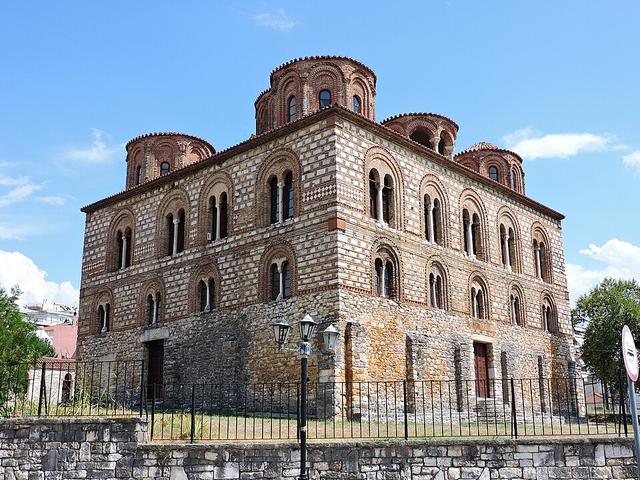
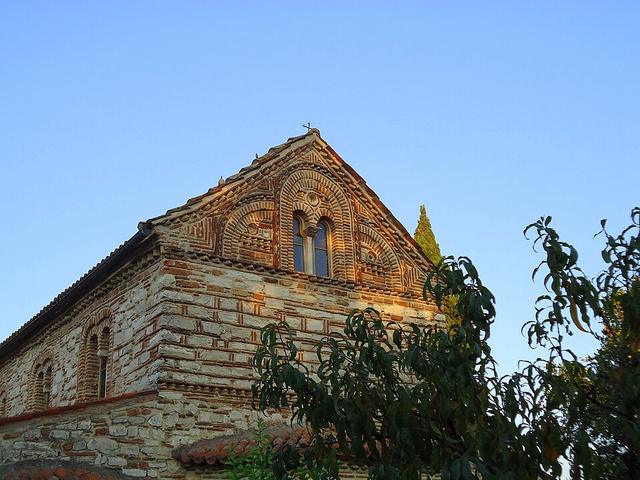
It has a free-cross plan with a cylindrical dome and conical roof, a square narthex to the west and a circular apse with a three-light window. Outside, stones are combined with bricks and ceramic decoration, with serrated bands around the dome windows.
Frescoes
Four layers were found after the 1969–1971 excavation. The first, of the second half of the 13th century, includes the Virgin of the Sign with two angels in the sanctuary and saints such as Panteleimon, Kosmas and Damianos. The second, of the 16th century, shows a blessing Saint Basil. Two further phases of the 17th century show Saints Constantine and Helen, the Baptism and equestrian saints.