Archaeological Museum of Arta
Finds from the cemeteries and public buildings of ancient Ambracia, in a new building by the Arachthos.
- Location
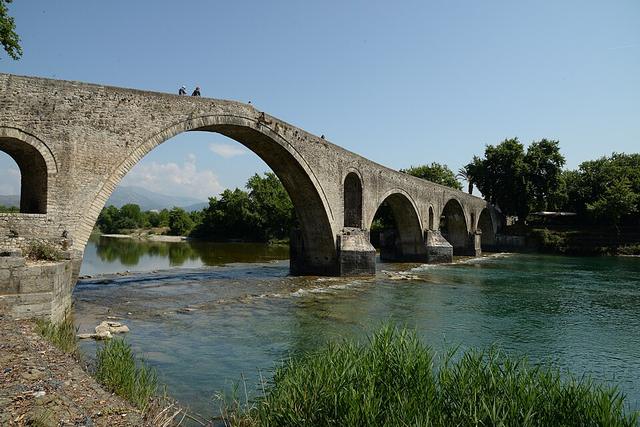
- By the Arachthos, near the historic bridge
- Founded
- 1973, as the Archaeological Collection of Arta
- First home
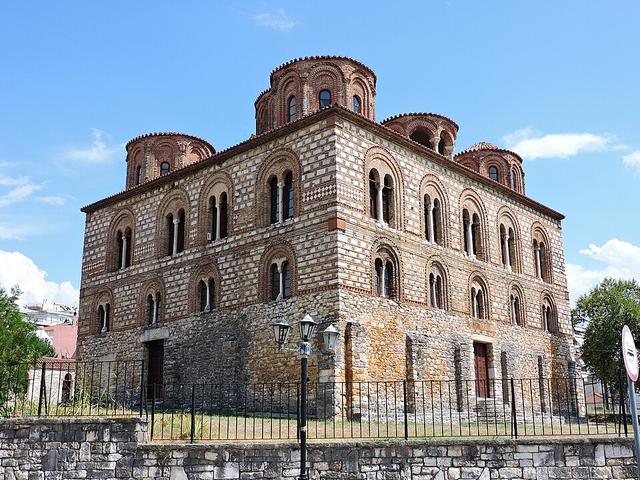
- The Parigoritissa, 13th century
- New building
- Opened in 2009
- Periods
- From the Paleolithic to the Roman era
The Archaeological Museum of Arta mainly houses finds from excavations of two cemeteries outside the walls of ancient Ambracia, the eastern and the southwestern. It also shows material from public buildings, such as the small and large theatres, the temple of Apollo and the Prytaneion, as well as from houses and workshops.
What you will see
The collections cover the Paleolithic to the Roman era. Most exhibits date to the Hellenistic period, when Ambracia was the capital of Epirus. The display has three main sections, on the public life, the cemeteries and the private life of the Ambraciotes, and smaller sections at the start and end on the birth and the fall of the city.
History of the museum
The museum was founded in 1973 as the Archaeological Collection of Arta and was housed in the 13th-century Parigoritissa. It moved to a purpose-built building that opened in 2009, by the Arachthos and near the Bridge of Arta.