Panagia Rodia
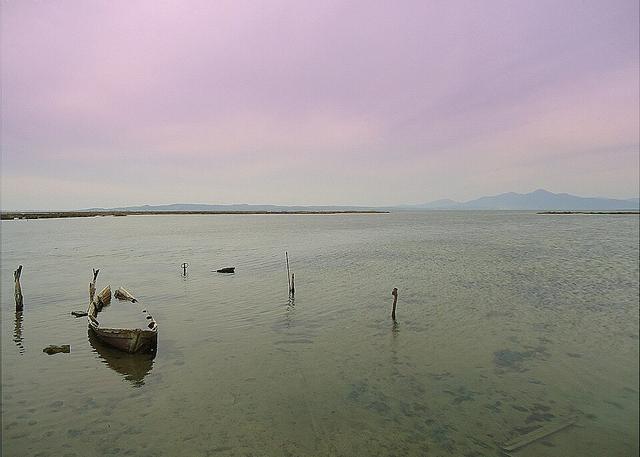
A church above the Rodia lagoon, with the history of a monastery that may go back to the 10th century.
- Location
- On the northeast shore of the Rodia lagoon, west of Arta
- Present church
- 1860, with frescoes of 1884
- First monastery
- 925 or 970 (estimates)
- Dedication
- Dormition of the Virgin
Panagia Rodia stands at the foot of Mount Mavrovounio (299 m), above the northeast shore of the Rodia lagoon, between the villages of Vigla and Strogyli. The church and the lagoon take their name from the icon type of the Virgin called “Rodon Amaranton”, the unfading rose.
History
The present church was built in 1860 on the site of an older Byzantine katholikon. Metropolitan Seraphim Xenopoulos dates the original monastery to 970, under Emperor John Tzimiskes, while Panagiotis Aravantinos proposes 925. The monastery was stavropegic, with many estates, a fish farm and four dependencies. It was largely destroyed during the Greek Revolution and the church lay in ruins until 1860.
The church
It is a large single-aisled cross-vaulted basilica with a vaulted narthex and a tall, very narrow dome, unusual in Epirus. The decoration of 1884 is by painters from Samarina, with bright colours and gentle faces in the style of the Chionades. On the slope there is a cave that was used as a hermitage.